
Australian Spouse Visa: An overview
An Australia spouse visa allows you to move to Australia to start your conjugal life with your Australian partner. This visa has different categories to suit an applicant’s circumstances, such as whether you are onshore, offshore, planning to marry, or married to an international student in Australia.
If you are married to someone who has Australian permanent residency (PR) or an Australian citizen, you might be eligible to apply for a spouse visa Australia. You must be very careful when applying, as the visa is strictly investigated by the Australian Department of Home Affairs in order to prevent fraudulent activities, such as fake marriages used to enter Australia
Understanding Australia’s partner visa procedure requires selecting the appropriate visa type based primarily on where the applicant is located and the nature of the relationship. Each visa subclass serves a distinct purpose, and choosing the right pathway is essential for a successful application.
Australia Spouse Visa Categories:
Australia offers several visa subclasses for spouses, partners, de facto partners and fiancés:
1. Spouse Visa (Subclass 309)
This partner visa is intended for applicants who are outside Australia at the time of application and visa decision. It is the first stage of the offshore partner migration process.
2. Spouse Visa (Subclass 820)
This option applies to individuals who are already in Australia on another valid visa (such as a visitor, student, or work visa) and wish to remain in the country while their partner visa is processed.
3. Prospective Marriage Visa (Subclass 300)
This visa is designed for couples who are engaged but not yet married. It allows the applicant to enter Australia to marry their Australian partner within the visa’s validity period. Australian immigration allows the de facto partners to get into marriage.
4. Student’s Spouse Visa (Subsequent entrant)
It is important not to confuse Partner Visas with the Subclass 500 Student Subsequent Entrant visa. While Subclass 500 may allow a spouse to accompany a student visa holder.
Spouse (Partner) Visa – Subclass 309 from Bangladesh
For applicants residing in Bangladesh, the Subclass 309 Partner Visa is the most common route to migrate to Australia based on marriage or a de facto relationship.
This is a temporary partner visa that permits the holder to:
- Live in Australia
- Work without restriction
- Study (without government financial support)
During this period, immigration authorities assess whether the conjugal relationship continues to meet partner visa criteria.
Key Eligibility Requirements for Subclass 309 – Spouse Visa in Australia
To qualify for the Subclass 309 visa, applicants must meet the following conditions:
Location Requirement:
You must be outside Australia when the partner visa application is submitted and when the visa is granted.
Genuine Relationship Evidence:
The spouse visa applicants must provide substantial documentation demonstrating that the relationship is genuine and ongoing.
Sponsorship:
The Australian partner must be an Australian citizen, permanent resident, or eligible New Zealand citizen
Approved by the Department as a sponsor.
Health and Character Checks:
The applicants must complete medical examinations with approved panel physicians for spouse visa to Australia.
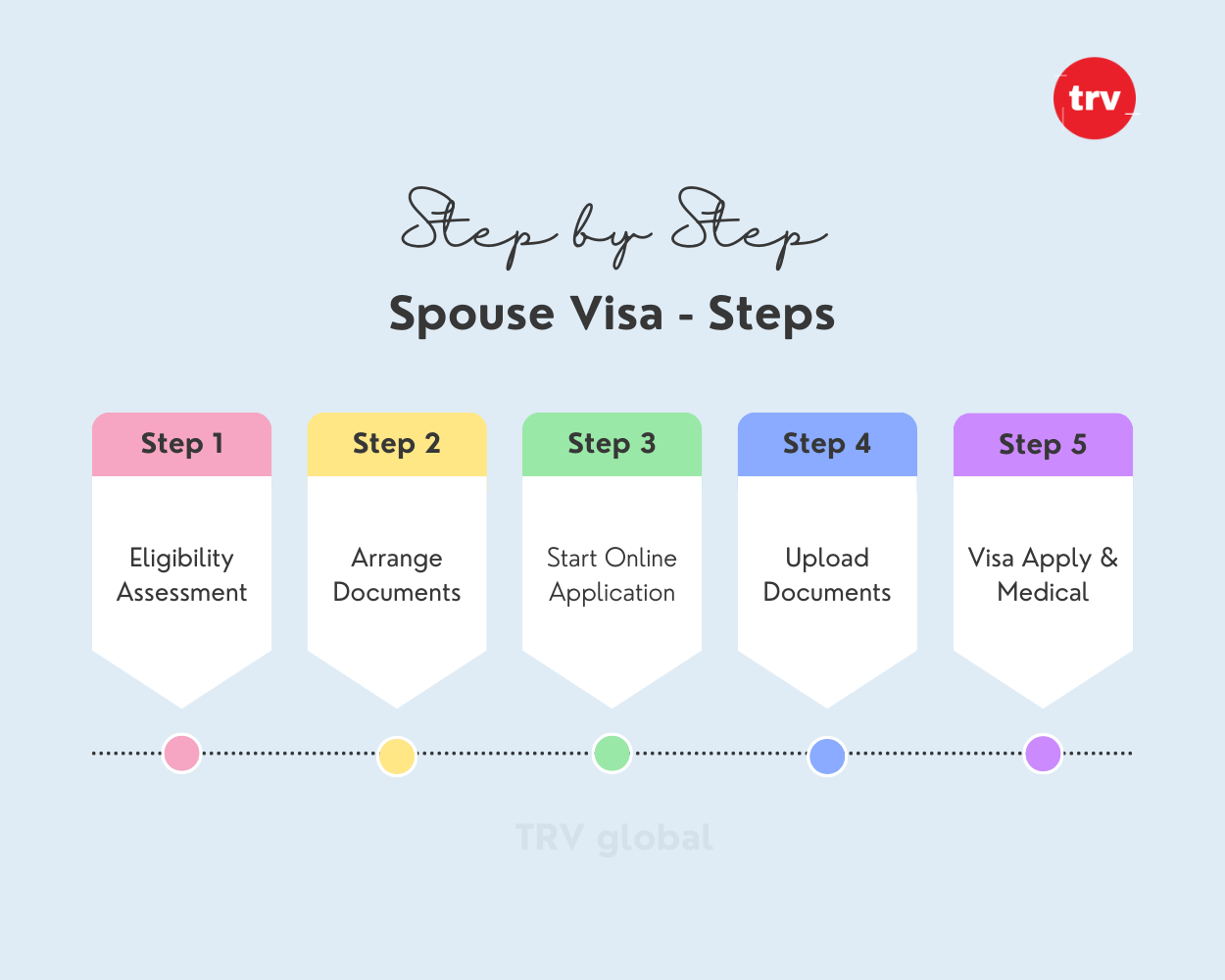
Spouse Visa (Subclass 309) from Bangladesh has two stages:
Stage One – Provisional Partner Visa
Once you meet the eligibility criteria, you must first apply for a temporary partner visa that allows you to travel to and live in Australia. During this period, your Australian partner acts as your official sponsor for a minimum of two years.
Stage Two – Permanent Residency
After spending at least two years in a genuine and ongoing relationship with your Australian partner, your application may be reassessed. If the relationship continues to meet immigration requirements, you may be granted Australian permanent residency.
Spouse Visa – Subclass 100 (Permanent Residency)
Approximately two years after the initial partner visa application, applicants may be assessed for permanent residence under Subclass 100.
At this stage:
– Updated relationship evidence is required
– Immigration authorities confirm the relationship remains genuine and continuing
If approved, the applicant is granted permanent resident status, allowing indefinite stay in Australia.
Onshore Partner Visa – Subclass 820
Applicants who are already in Australia on an eligible temporary visa may pursue the Subclass 820 Partner Visa. This option allows you to remain lawfully in Australia, with unrestricted work rights, while your partner visa in Australia is assessed.
Eligibility Highlights for Subclass 820
Location at Lodgement
The application must be submitted while you are physically present in Australia.
Minimum Relationship Duration (De Facto Couples)
In most cases, de facto partners must show that the relationship has existed for at least 12 months. This requirement may be waived if the relationship is officially registered or if exceptional circumstances apply.
Prospective Marriage Visa – Subclass 300
The Subclass 300 visa, commonly referred to as the fiancé visa, is a short-term entry permit valid for nine months. It is intended for couples who plan to marry in Australia within that period.
After the marriage has taken place, the visa holder may apply for an onshore partner visa, allowing progression toward permanent residence.
Subsequent Entrant (Subclass 500)
When one partner is studying in Australia on a Student Visa (Subclass 500), the other partner may apply as a Subsequent Entrant. This pathway enables families to live together in Australia during the student’s course of study.
Key Conditions for Subsequent Entrant Applications
Evidence of Relationship
Partner visa Applicants must provide formal proof of marriage or documentation supporting a de facto relationship.
Health Insurance Requirement
Overseas Student Health Cover (OSHC) must be maintained for the entire stay in Australia.
Financial Evidence
Proof of adequate funds is required to demonstrate the ability to meet living expenses.
Temporary Stay Intention
Applicants must show that their stay in Australia is temporary and directly connected to supporting the primary student’s education.
Typical Processing Time
Most applications are processed within two to four months, although timelines can vary depending on individual circumstances.
Frequently Asked Questions
The initial stage of partner visas (Subclass 309 or 820) is generally processed within 12 to 24 months, depending on case complexity.
Immigration authorities assess relationships across four main areas:
financial arrangements, shared living arrangements, social recognition, and long-term commitment.
For the 2025–2026 period, the base government fee for a Partner Visa application is AUD 9,365.
Partner visas require extensive documentation. Applications are often refused not due to a lack of a genuine relationship, but because the evidence provided does not adequately meet legal standards.
Yes you can. But if you do not have expertise or previous experience in Australian immigration application, then contact Australian immigration consultant for a error-free application.
Yes, a spouse visa and a partner visa are the same thing in Australia.
Yes! At TRV Global, we specialize in Australia’s spouse (Partner) visa applications.